Table of Contents
- Understanding Legal Rights and Requirements for Foreign Property Owners
- Hiring a Property Manager in Costa Rica: What You Need to Know
- Costa Rica Property Management Fees and Cost Structure
- Remote Property Management Strategies for Absentee Owners
- Tax Implications and Financial Considerations for Non-Resident Owners
- Securing and Protecting Your Asset From Abroad
- Managing Rental Income and Financing From Abroad
- Conclusion
Last Updated: August 17, 2026
Understanding Legal Rights and Requirements for Foreign Property Owners
Foreign property ownership in Costa Rica is legal and protected by the same constitutional rights afforded to Costa Rican citizens. The country's stable legal framework makes it one of Central America's most accessible markets for international buyers. Non-resident foreign owners must register their property with the National Registry (Registro Nacional) and obtain a tax identification number (Cédula Jurídica) from the tax authority. According to Costa Rica's official legal documentation on property rights, foreign nationals have identical ownership rights to local citizens, with no restrictions on property type, location, or duration of ownership.
The legal source of funds for your purchase must be documented and traceable. Costa Rica's financial regulations require proof that money used for the down payment originates from legitimate sources. Wire transfers from your home country bank are the standard method and are heavily scrutinized by SUGEF (the banking regulator). Keep all documentation of fund transfers, as this becomes critical if you later need to refinance, sell, or transfer the property.
Hiring a Costa Rican attorney (abogado) experienced in real estate transactions is essential. Your attorney handles title searches, ensures all permits are in order, arranges for a notary public to authenticate the deed, and protects your interests during closing. This is one area where cost-cutting creates serious risk.
Hiring a Property Manager in Costa Rica: What You Need to Know
Managing a vacation rental property remotely without professional support is nearly impossible. A qualified property manager handles guest communication, check-ins, housekeeping coordination, maintenance oversight, and emergency response, the operational details that determine whether your investment generates consistent revenue or becomes a financial drain.
The property management market in Costa Rica ranges from small independent operators to larger companies with multiple properties. Most managers charge a percentage of gross rental income or a combination of base fee plus commission. This aligns their incentive with your revenue, which is the structure you want.
Vetting and Selecting the Right Manager
Start by requesting references from property managers and contacting at least three current clients. Ask specifically about occupancy rates before and after the manager took over, how maintenance emergencies are handled, and whether the manager converts one-time guests into repeat bookings.
Verify that the property manager has proper business registration and liability insurance. In Costa Rica, legitimate property management companies hold a business license (Cédula Jurídica) and carry insurance that protects your property during their operations. Request proof of both. A manager operating without these protections is a red flag.
Interview managers about their technology stack. How do they communicate with guests? What booking channels do they use? Do they have a client portal where you can see real-time occupancy, revenue, and maintenance logs? The best managers use integrated platforms that give you complete visibility into your property's performance.
Property Management Agreement Essentials
The property management agreement is your legal protection. It must specify the manager's exact responsibilities, fee structure, payment terms, liability limits, and termination conditions. Never sign an agreement that doesn't clearly define what happens if the manager fails to deliver promised occupancy rates or mishandles guest funds.
Your agreement should include a clause requiring the manager to maintain a separate escrow account for guest deposits and rental payments. This prevents commingling of client funds with the manager's operating capital. Verify that the escrow account is held with a legitimate Costa Rican bank.
Include specific language about maintenance decision-making authority. Define which repairs the manager can authorize without your approval (emergency fixes, routine maintenance) and which require your explicit consent (capital improvements, major replacements). This prevents surprise invoices while ensuring emergencies don't stall waiting for your approval.
Costa Rica Property Management Fees and Cost Structure
Understanding the full cost of professional management helps you evaluate whether hiring a manager makes financial sense for your property. Management fees typically range based on the services included and your property's characteristics.
Most property managers in Costa Rica's luxury market charge either a percentage of gross rental income, a flat monthly fee, or a hybrid structure combining both. A percentage-based model (common for vacation rentals) might be structured as a percentage of revenue plus additional fees for specific services like guest screening or maintenance coordination.
Beyond the management fee, budget for additional costs: housekeeping between guests, utilities, property maintenance and repairs, property taxes, insurance, and potentially marketing expenses. These costs vary significantly based on your property's condition, age, and occupancy levels.
Calculate your break-even occupancy rate. If your property generates a certain monthly revenue and you subtract management fees, utilities, maintenance reserves, and taxes, you can determine what occupancy level you need to achieve positive cash flow. Properties that can't reach this threshold within six months may need different management strategies or pricing adjustments.
Remote Property Management Strategies for Absentee Owners
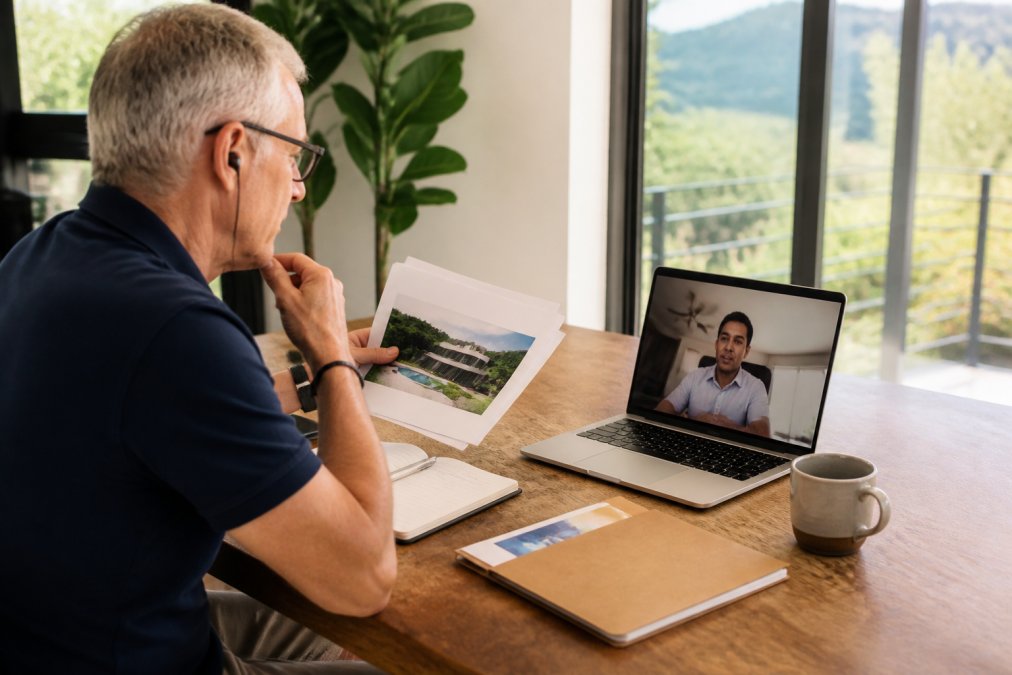
Successfully managing your property from abroad requires systems that keep you informed without requiring constant intervention. Establish a communication schedule with your property manager. Weekly check-ins via email or video call are standard for active owners. This demonstrates you're engaged and reduces misunderstandings.
Digital Tools for Remote Oversight
Your property manager should provide access to a client portal or dashboard where you can monitor real-time occupancy, revenue, expenses, and maintenance logs. This transparency is non-negotiable. Platforms that integrate booking channels, accounting, and guest communication in one place give you complete visibility without requiring daily check-ins.
Set up automated reporting. Your manager should send you monthly statements showing occupancy rates, revenue, expenses, and any maintenance performed. These reports should be detailed enough that you can spot trends, declining occupancy, rising maintenance costs, or unusual guest complaints.
Emergency Protocols and Maintenance Oversight
Establish clear protocols for emergencies before they occur. Define what constitutes an emergency (burst pipes, electrical fire, break-in) versus routine maintenance (clogged drain, minor appliance failure), and specify the manager's authority to act without your approval for each category.
Require your manager to document all maintenance with photos and invoices. This creates a maintenance history that protects your asset and provides evidence if you need to make insurance claims. Schedule quarterly property inspections if possible. If you can visit your property in person, do it. If not, hire a local property inspector to conduct a walkthrough and provide a detailed report with photos.
Tax Implications and Financial Considerations for Non-Resident Owners
Owning rental property as a non-resident creates tax obligations in both Costa Rica and your home country. Costa Rica taxes rental income at progressive rates for non-residents. You must file an annual tax return (Declaración Jurada) with the tax authority and pay taxes on net rental income (revenue minus legitimate expenses).
Rental Income Reporting and Currency Exchange
All rental income must be reported in Costa Rican colones, which means you need to track the exchange rate on the date you receive payment. Keep detailed records of all currency conversions.
Wire transfers from your property manager to your home country bank incur fees and exchange rates that reduce your net proceeds. Many remote owners maintain a Costa Rican bank account to minimize these costs. Legitimate banks in Costa Rica allow non-residents to open accounts, though they increasingly require higher minimum balances and scrutinize the source of funds carefully.
Capital Gains and Cross-Border Tax Compliance
When you eventually sell your property, Costa Rica imposes capital gains tax on the difference between your purchase price and sale price. Your home country likely requires you to report Costa Rican rental income and capital gains on your tax return. You may be eligible for foreign tax credits to avoid double taxation, but this requires proper reporting and documentation.
Consult a cross-border tax specialist before purchasing your property. A few hundred dollars in professional tax advice upfront can save thousands in overpayment or penalties later.
Securing and Protecting Your Asset From Abroad
Your property is a significant investment that requires active protection even when you're thousands of miles away. Security and maintenance oversight are the two pillars of asset protection.
Asset Security and Tenant Screening
If your property operates as a vacation rental, your manager should implement thorough guest screening. This includes verifying guest identity, checking for concerning reviews from previous bookings, and flagging bookings from guests with short booking windows or vague information about their stay.
For longer-term rentals, tenant screening is even more critical. Verify employment, contact previous landlords, and run background checks. A tenant who damages the property or refuses to pay rent creates legal complications that are exponentially harder to resolve from abroad.
Ensure your property has adequate security systems. This might include door and window locks, motion-sensor lighting, a security camera system (with cloud backup so you can access footage remotely), and an alarm system monitored by a local security company.
Property Inspection and Maintenance Documentation

Require your manager to conduct monthly property inspections and provide photographic documentation. This creates a record of the property's condition and catches maintenance issues before they become expensive problems.
Maintain a maintenance reserve fund. Set aside a percentage of monthly rental income specifically for unexpected repairs. Properties in tropical climates like Costa Rica face accelerated wear from humidity, salt air (if coastal), and intense sun. Document all maintenance with receipts and photos to demonstrate proper care of the asset.
Managing Rental Income and Financing From Abroad
Currency management and international banking create practical challenges for remote owners. If you financed your purchase, your loan agreement likely specifies payment terms and consequences for missing payments. International wire transfers to your lender should be made well in advance of due dates to account for processing delays.
Reinvesting rental income back into the property for upgrades, furnishings, or maintenance can improve occupancy and guest satisfaction. Track these investments carefully for tax purposes, as capital improvements may be deductible or depreciable depending on your tax situation and jurisdiction.
Consider whether you want to repatriate income to your home country or keep funds in Costa Rica. Keeping money in a Costa Rican bank account simplifies property management and reduces currency exchange costs, but it creates a foreign financial asset that may trigger reporting requirements in your home country. Consult your accountant about the reporting implications.
Conclusion
Managing Costa Rica property from abroad is entirely feasible with the right professional support and systems in place. The combination of a qualified property manager, clear legal agreements, proper tax planning, and regular oversight ensures your investment operates smoothly while you're thousands of miles away. At Marquis Stays Property Management, we specialize in handling exactly this challenge for remote owners of luxury properties throughout Potrero, Tamarindo, La Fortuna, and Guanacaste. Our team manages guest communication, maintenance coordination, emergency response, and revenue optimization, giving you complete peace of mind while maximizing your investment returns. Learn more about professional property management services and discover how data-driven oversight can transform your property's performance.
| Management Task | Frequency | Your Role | Manager's Role |
|---|---|---|---|
| Occupancy monitoring | Weekly | Review reports | Track and optimize |
| Maintenance oversight | Monthly | Approve reports | Coordinate and document |
| Guest communication | Per booking | Escalations only | Primary contact |
| Financial reporting | Monthly | Review statements | Track and reconcile |
| Property inspection | Quarterly | Review photos | Conduct walkthrough |
| Tax compliance | Annual | File return | Provide documentation |
Frequently Asked Questions
Can you own property in Costa Rica as an American or foreign national?
Yes, foreign nationals have the same constitutional rights to own property in Costa Rica as citizens. You can purchase residential, commercial, or investment property without restrictions. However, you must establish legal source of funds documentation and work with a notary public to register title. Many foreign investors choose to work with legal representation to ensure compliance with local real estate laws and proper title registration.
How much do property managers charge in Costa Rica?
Costa Rica property management fees typically depend on property type, location, rental income level, and service scope. Managers may charge a percentage of monthly rental income, a flat monthly fee, or a combination. Pricing varies significantly between regions and service providers. Contact local property management companies directly for current rates, or request a quote based on your specific property details and management needs.
What are the main tax implications of owning vacation rental property in Costa Rica as a non-resident?
Non-resident owners must report rental income to Costa Rican tax authorities, typically through SUGEF compliance requirements. You may owe property tax, capital gains tax on future sales, and income tax on rental earnings. Currency exchange rates affect your reported income in your home country. Cross-border tax compliance requires careful documentation of all rental income, expenses, and property improvements. Consult a tax professional familiar with both Costa Rican and your home country's tax codes to minimize liability and ensure proper reporting.
How do I handle maintenance and emergency repairs for my Costa Rica property while living abroad?
Establish clear emergency protocols with your property manager before issues arise. Document all maintenance procedures, vendor contacts, and approval thresholds in your property management agreement. Use digital tools to receive photos and updates of repairs in real time. Schedule regular property inspections to catch problems early. Maintain an emergency fund for unexpected repairs and establish pre-approved vendor relationships. A professional property manager handles routine maintenance oversight, tenant communication, and emergency coordination while keeping you informed remotely.
What should I look for when hiring a property manager in Costa Rica?
Evaluate managers based on experience with similar properties, local market knowledge, guest screening practices, and communication systems. Request references from current clients and verify their ability to handle maintenance, housekeeping coordination, and guest communication. Review their property management agreement carefully, including fee structure, liability coverage, and performance metrics. Ask about their approach to direct-booking revenue growth and how they report rental income and expenses. A strong manager should provide transparency, regular reporting, and proactive asset protection.
Can a property manager really convert one-time guests into repeat bookings?
Yes, professional managers use guest experience optimization, follow-up communication, and loyalty incentives to encourage repeat bookings and direct reservations. They maintain detailed guest records, personalize communication, and address issues promptly to build lasting relationships. Data-driven managers analyze booking patterns and guest feedback to improve satisfaction and retention. Request case studies or performance data from potential managers showing their track record with repeat booking rates and direct-booking revenue growth for similar properties.
What happens if I need to transition from my current local manager to a new property management company?
Plan the transition carefully by establishing an overlap period where both managers coordinate handoff. Ensure all property documentation, guest records, maintenance history, and vendor contacts transfer completely. Document the property's condition with photos and inspections before and after transition. Communicate clearly with guests about the management change. A professional management company will handle the transition smoothly while maintaining guest relationships and operational continuity. Include transition terms in your management agreement to protect your interests.
This article was written using GrandRanker