Table of Contents
- Why Remote Management of Luxury Rentals Requires a Different Approach
- Selecting Luxury Property Management Software That Works for Distant Owners
- Setting Up Smart Home Technology and Remote Access Control
- Crafting Luxury Rental Guest Communication Templates and Protocols
- Building Your Local Team: Hiring a Local Property Manager for Luxury Rentals
- Creating a Remote Property Management Checklist for Daily Operations
- Managing Emergency Repairs and Maintenance Coordination from Afar
- Automating Rent Collection, Compliance, and Legal Documentation
Last Updated: August 8, 2026
Why Remote Management of Luxury Rentals Requires a Different Approach
Managing luxury rentals remotely demands a different operational framework than standard vacation properties. High-end guests expect white-glove service, seamless communication, and immediate problem resolution regardless of timezone. You can't inspect maintenance work or address concerns in person, so you need systems that anticipate problems, communication protocols that feel personal despite distance, and a local team you can trust.
At Marquis Stays Property Management, we've worked with owners across Costa Rica's most competitive markets, Tamarindo, Potrero, La Fortuna, and Guanacaste, and the pattern is clear: successful remote properties use technology strategically, invest in the right local people, and build processes that work without constant owner intervention.
This guide covers the software decisions, technology infrastructure, team structure, and operational checklists that separate properties generating consistent six-figure revenue from those that drain your time and attention.
Selecting Luxury Property Management Software That Works for Distant Owners
The right luxury property management software becomes your operational command center when managing from afar. You need a system that handles guest communication, maintenance coordination, financial reporting, and compliance documentation in one integrated platform.
Identify what matters most to your situation. If managing multiple properties, you need software that scales without duplicating work. If direct bookings are your focus, you need a platform that converts repeat guests into returning customers. If you're in a regulated market, you need built-in documentation and compliance tools.
The best luxury property management software for remote owners combines three capabilities: centralizing all guest communication in one inbox, automating routine tasks like check-in instructions and follow-ups, and providing real-time visibility into property status, occupancy, revenue, and guest feedback.
Pick a system that handles your most frequent tasks flawlessly and integrates with tools you already use. A platform that does five things exceptionally well beats one that does twenty things adequately. Look for mobile access so you can respond from anywhere, detailed financial reporting showing occupancy rates and seasonal trends, and integration with your payment processor for automatic rent collection.
Setting Up Smart Home Technology and Remote Access Control
Smart home technology transforms remote management from stressful to manageable. The right setup lets you monitor property conditions in real time, grant guests access without physical keys, and respond to maintenance issues before they escalate.
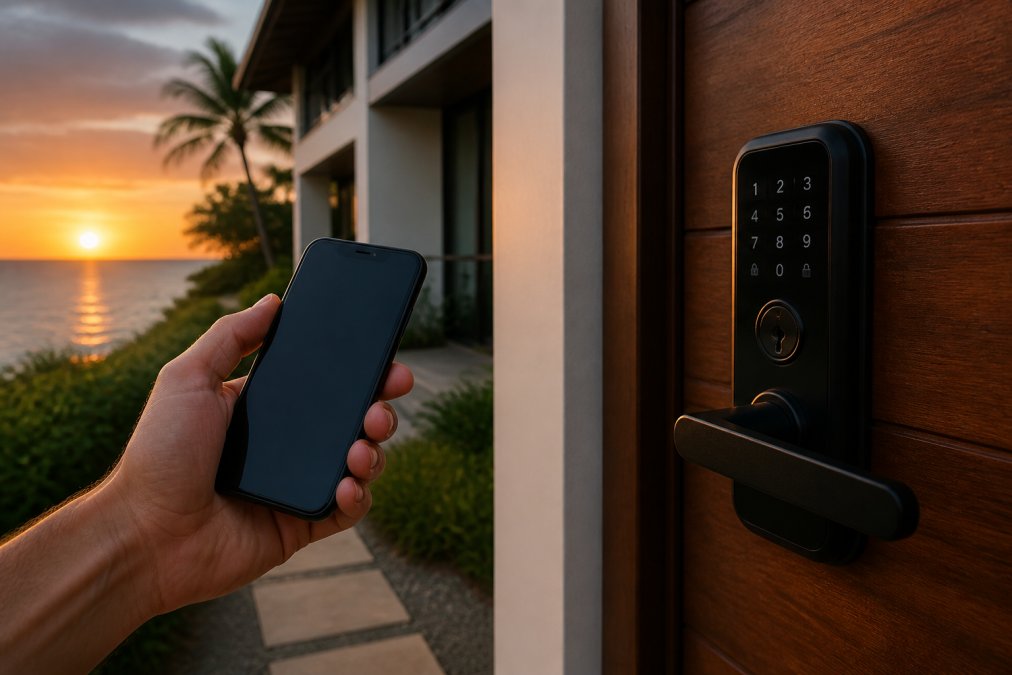
Start with smart locks. Keyless entry eliminates key coordination logistics and security risks. Guests receive unique access codes for their stay. You can grant temporary access to housekeeping, maintenance contractors, and inspectors without meeting them in person. The system logs every entry and exit.
Add remote monitoring through security cameras at entry points and common areas. This lets you confirm guest arrival, verify housekeeping completion, and confirm contractors finished their work. Many issues get resolved by simply checking footage.
Temperature and humidity monitoring prevents damage to high-end finishes, wood floors, artwork, and leather furnishings. Smart sensors alert you if conditions drift outside safe ranges so you can address HVAC issues immediately.
Water leak detection placed under sinks, near water heaters, and in basements sends instant alerts so you can dispatch a contractor before significant damage occurs.
Connect everything through a central hub that sends alerts to your phone. You don't need multiple apps or websites. When something requires attention, you know immediately.
Crafting Luxury Rental Guest Communication Templates and Protocols
Communication is where remote ownership either succeeds or fails. Guests expect immediate, professional, thoughtful responses regardless of your location.
Build communication templates covering your most frequent scenarios: booking confirmation, pre-arrival information, check-in instructions, special requests, maintenance issues, checkout reminders, and post-stay follow-up. Templates should reflect your property's personality and commitment to guest experience.
Your pre-arrival message should include check-in times, wifi passwords, parking information, and how to reach you. Include photos or a video walkthrough showing key features, appliance operation, and where to find supplies. This reduces unnecessary questions and makes guests feel welcomed.
For maintenance issues, acknowledge immediately, explain your resolution steps, provide a timeline, and offer compensation if the issue significantly impacts their stay. A guest whose concern is handled quickly and transparently is far more likely to return.
Post-stay communication converts one-time guests into repeat bookings. Send a thank-you message within 24 hours, ask for feedback, and offer a special rate for their next stay.
Building Your Local Team: Hiring a Local Property Manager for Luxury Rentals
You cannot manage a luxury rental property remotely without a capable local team. This is the non-negotiable foundation of successful remote ownership.

The right local property manager becomes your eyes, ears, and hands on the ground. They handle guest check-ins, coordinate housekeeping and maintenance, respond to emergencies, and manage day-to-day details you can't handle from abroad.
When hiring, look for someone with direct experience managing luxury properties in your specific region. They need to understand luxury guest expectations, know reliable local contractors, and have the judgment to make decisions aligned with your property's standards.
Ask candidates about their experience with remote owners, their emergency response process, guest communication procedures, and how they vet local contractors. Establish clear expectations in writing: define responsibilities, communication frequency, and how often they'll update you on property status, occupancy, revenue, and issues.
Compensation matters. Underpaying for this role is false economy. A skilled property manager who takes ownership of the property's success generates far more value than they cost. Many owners find revenue increases from proper management quickly offset the management fee.
Set up a trial period of 30 to 60 days before committing long-term.
Creating a Remote Property Management Checklist for Daily Operations
Remote management requires documented procedures. You need a checklist that guides your team through daily operations so nothing falls through the cracks.
Your daily checklist should cover: checking for overnight guest messages and responding within 2 hours, reviewing occupancy and upcoming arrivals, confirming housekeeping completion, inspecting property photos from smart home cameras, and reviewing maintenance or guest concerns.
Weekly, expand to: reviewing financial reports and occupancy metrics, confirming contractor work quality, checking guest feedback and ratings, planning for upcoming turnover periods, and addressing operational issues. This weekly review takes 60 to 90 minutes but prevents small problems from becoming big ones.
Monthly, conduct a deeper review: analyze booking trends and pricing strategy, assess contractor performance, plan seasonal maintenance, and review financial performance against targets.
Assign ownership. Your property manager owns the daily and weekly checklist. You own the monthly review and strategic decisions. Document the checklist in your property management software or shared spreadsheet so it's accessible and completion is tracked.
Managing Emergency Repairs and Maintenance Coordination from Afar
Emergency repairs happen. Your ability to respond quickly determines whether situations stay contained or escalate into guest complaints and revenue loss.
Build a pre-vetted network of local contractors before you need them. Your property manager should identify reliable plumbers, electricians, HVAC technicians, and general handspeople with multiple phone numbers for each service category. Confirm they can respond to emergencies within 2 to 4 hours.
Create a written emergency response protocol. When a guest reports an issue, your property manager should: acknowledge the problem immediately, assess severity, contact the appropriate contractor, keep the guest updated on resolution timeline, and confirm resolution once work is complete. For serious issues (no water, electricity, or climate control), contact the contractor within 30 minutes.
Your property manager should photograph all work before and after. This creates a record of what was done and helps you track maintenance patterns to identify whether systems need replacement rather than repeated repair.
Document all maintenance costs and work performed for long-term maintenance planning and financial analysis.
Automating Rent Collection, Compliance, and Legal Documentation
Automation in rent collection and compliance documentation saves time and eliminates human error. When these processes run on autopilot, you free up energy for strategy and growth.
Set up automated payment collection through your property management software. Guests should pay deposits and final balances through your system, not manual bank transfers. Automated collection reduces payment delays, eliminates follow-up on unpaid balances, and creates a clear audit trail.
Your software should generate lease agreements automatically based on your standard terms. This ensures consistency and covers cancellation policies, house rules, damage liability, and guest responsibilities. Digital signatures complete the process without printing or scanning.
Compliance documentation varies by region. In Costa Rica, rental properties are subject to local regulations around tax reporting, tourist board registration, and guest documentation requirements. Your software should track and automate what's required in your specific area.
Maintain detailed records of all guest stays, payments, and communications. Your software should generate reports showing occupancy rates, revenue per guest, seasonal trends, and year-over-year comparisons.
Confirm your property is properly insured for vacation rental use. Standard homeowners insurance often excludes rental income. Work with an insurance broker familiar with vacation rental properties to ensure adequate coverage.
Consult with a tax professional familiar with Costa Rican rental property taxation to understand your obligations and identify legitimate deductions.
Remote management of luxury rentals succeeds when three elements align: reliable technology that gives you visibility, a skilled local team that handles daily operations, and documented processes that ensure consistency. Remote ownership demands more clarity, better systems, and stronger communication than on-site management.
Marquis Stays Property Management specializes in helping remote owners build this framework. We handle operational details, guest communication, maintenance coordination, housekeeping oversight, and financial reporting, so you get the visibility and control you need without the day-to-day management burden. Since the team at Marquis took it over we've seen revenue more than double. Our direct booking revenue is up more than 40% year over year. If you're ready to transition from struggling with remote management to profiting from it, List My Property and let's discuss how we can optimize your luxury rental's performance.
Frequently Asked Questions
Can you really manage a luxury rental property from another country without being on-site?
Yes, but it requires the right systems in place. Smart locks, security cameras, and property management software allow you to monitor and control access remotely. The key is hiring a trusted local property manager or team who handles guest communication, maintenance coordination, and daily operations. With automated rent collection, digital documentation, and real-time alerts, you can oversee everything from abroad. Many owners successfully manage luxury rentals across continents by combining technology with a reliable on-ground team.
What's the cost difference between managing remotely yourself versus hiring a local property manager?
Self-management saves on management fees but costs time and carries operational risk. A local property manager handles guest communication, maintenance emergencies, turnover coordination, and tenant screening, freeing you entirely. Pricing depends on your property's rental income, location, and service level. Most luxury property owners find that professional management increases occupancy and rental rates enough to offset fees while eliminating stress. Request a custom quote to compare the financial impact against your current revenue.
How do you handle emergency repairs or maintenance issues when you're not there?
A reliable local team is essential. Establish a vetted vendor network before issues arise, with 24/7 emergency contacts for plumbing, electrical, and structural problems. Use property management software to log service requests, track costs, and maintain digital documentation. Smart home monitoring alerts you to issues like water leaks or temperature changes in real time. Your on-ground team can respond immediately while you approve expenses and monitor progress remotely. Clear protocols and vendor relationships prevent costly delays.
What tools and systems do I need to manage a luxury rental property remotely?
Essential systems include luxury property management software for bookings and guest communication, smart locks and security cameras for access control and monitoring, automated rent collection systems, and a communication portal for tenant interaction. Digital documentation through cloud storage ensures lease agreements and compliance records are accessible anywhere. Real-time alerts notify you of guest arrivals, maintenance needs, or security events. A local property manager or team coordinates the on-ground operations. Together, these tools create operational efficiency and asset protection for remote owners.
This article was written using GrandRanker