Last Updated: November 13, 2026
Quick Summary
Appliance replacement planning means deciding in advance when each rental appliance will be replaced instead of waiting for it to fail. Owners who plan ahead can schedule replacements between guest stays, avoid emergency purchases at peak prices, and spread costs across the year.
- Typical rental lifespans: refrigerators 8 to 12 years, dishwashers 5 to 8 years, water heaters 6 to 10 years.
- Replace when a repair costs more than about half a new unit's price.
- Replace when an appliance passes about 70% of its expected life.
- Build a replacement window with a three- to four-month buffer for high-turnover items.
- Schedule replacements in gaps of at least five to seven days between guest stays.
Table of Contents
- Why Appliance Replacement Planning Matters for Vacation Rentals
- Typical Appliance Lifespans in a Vacation Rental
- Repair or Replace Rental Appliances: A Decision Matrix
- Building a Vacation Rental Appliance Replacement Calendar
- Setting a Rental Property Appliance Replacement Budget
- Keeping a Rental Appliance Maintenance Log
- Scheduling Replacements Between Guest Stays and Seasonal Checks
- Frequently Asked Questions
Why Appliance Replacement Planning Matters for Vacation Rentals
Appliance replacement planning is the practice of deciding, in advance, when each appliance in a rental home will be replaced rather than waiting for it to fail. Owners who plan ahead are generally better placed to control costs and protect their guest experience. Learn how to increase vacation rental occupancy and revenue to fund replacements.
Appliances in a rental home work harder than appliances in a family home. Guests run dishwashers and washing machines several times a week, and a property may sit empty for weeks with appliances switched off or running in an unusual pattern. Both conditions shorten service life.
Planning helps you do three things:
- Avoid emergency purchases at the worst possible time
- Schedule replacements between guest stays instead of during them
- Spread the cost across the year so it does not hit your cash flow in one month
Typical Appliance Lifespans in a Vacation Rental
Expected lifespan depends on the appliance, its quality and how heavily it is used. Rental use often shortens service life, so planning replacements sooner than at home is a sensible precaution.
Lifespan Expectancy Table for Common Rental Appliances
| Appliance | Typical Lifespan (Rental Use) | Common Warning Signs |
|---|---|---|
| Refrigerator | 8 to 12 years | Warm spots, frost buildup, loud compressor |
| Dishwasher | 5 to 8 years | Cloudy dishes, leaks, longer cycles |
| Washing machine | 6 to 9 years | Slow drain, vibration, error codes |
| Oven and range | 10 to 15 years | Uneven heat, faulty igniters |
| Water heater | 6 to 10 years | Rust-colored water, rumbling, no hot water |
| Air conditioning unit | 8 to 12 years | Weak airflow, odd smell, rising power use |
Typical Lifespan (Rental Use)
These ranges are general guidance. Check each appliance's age, service history and condition during inspections rather than relying on the table alone.
Repair or Replace Rental Appliances: A Decision Matrix
The common rule, replace when a repair costs more than half a new unit, is a starting point, not a decision. Compare full service property management costs and what they cover. In a vacation rental, the cost of a failure includes lost booking revenue, emergency labor premiums, guest compensation, and review damage. A repair that looks cheap on the invoice can still be the expensive choice if it fails again during high season.
The four costs to compare
- Repair cost versus replacement cost. Get a written quote for the repair and two quotes for a comparable new unit, including delivery and installation. If the repair exceeds roughly 50% of the replacement cost, replacement usually wins.
- Remaining life. Estimate how many years the appliance has left at rental-use intensity. A repair that buys two years on an eight-year-old dishwasher is poor value; the same repair on a three-year-old unit is reasonable.
- Operating cost. Older refrigerators, water heaters, and air conditioning units often use more electricity or water. Ask the technician for the unit's rated consumption and compare it with a current model. A replacement that cuts monthly utility cost can pay back part of its price over its life.
- Risk and downtime. Weigh the probability of failure during a booking against the cost of an emergency replacement. High-turnover appliances that guests depend on daily, refrigerator, water heater, air conditioning, carry the highest downtime risk.
A decision sequence
- Repair when the appliance is under half its expected rental life, the fault is isolated, parts are locally available, and the repair cost is well below half the replacement price.
- Repair once, then plan when the appliance is mid-life and the repair restores full function. Put the replacement on the calendar within twelve months.
- Replace now when the appliance is past 70% of expected life, when the same fault has recurred twice in twelve months, when parts must be imported with long lead times, or when a safety issue such as a gas leak or electrical fault is present.
- Replace early when the only available replacement window before high season is now. Paying for a few months of unused life is cheaper than an emergency purchase at peak prices.
Total cost of ownership in practice
For each major appliance, add the purchase price, estimated installation and disposal, expected repairs over its life, and expected utility cost. Subtract any warranty coverage and expected resale or scrap value. Compare that total with the remaining-life cost of keeping the current unit.
Watch out: a cheap replacement model with no local parts supply can cost more over five years than a mid-range model that local technicians can service quickly. Check parts availability before you buy, not after the first breakdown.
When guest impact changes the answer
If an appliance fails during a stay, the decision is no longer only financial. A refrigerator failure in a full house may justify a same-day replacement even at a premium, because the alternative is guest compensation, a possible refund, and a review that affects future bookings. Keep a short list of approved emergency suppliers and a pre-authorized spending limit so the decision can be made on site without delay.
Building a Vacation Rental Appliance Replacement Calendar
A replacement calendar is not a list of end-of-life dates. It is a booking-aware schedule that places each replacement in a specific low-occupancy window, with enough lead time for delivery, installation, and a test run before the next guest arrives. The goal is to never replace an appliance while a booking is active and never order one after it has already failed.
Step 1: Build the appliance register
List every appliance with five fields: model and serial number, installation date (or best estimate from the purchase receipt), rated service life for rental use, current condition score, and the month you want to replace it. A simple spreadsheet is enough. The register becomes the single source of truth for warranty claims, parts ordering, and budget forecasts.
Step 2: Convert lifespan into a replacement window
Take the expected end of life from your lifespan table and subtract a buffer. For high-turnover items such as dishwashers and washing machines, a three- to four-month buffer is common because failure during a stay is costly. For lower-risk items such as ovens, a two-month buffer is usually enough. The result is a target window, not a single date.
Step 3: Overlay the booking calendar
Map each target window against confirmed and projected bookings. The best replacement slot is a gap of at least five to seven days between stays: enough time for delivery, installation, a full test cycle, and a turnover clean.
Watch out: a calendar that only looks at occupancy and ignores supplier lead times will slip. Confirm delivery windows with local suppliers before locking the date, because imported models can take weeks to arrive.
Step 4: Group replacements to reduce disruption
Where two appliances are within twelve months of each other, consider replacing both in the same gap. One delivery, one installer visit, and one set of disposal arrangements usually cost less than two separate events, and it removes a second disruption from the booking calendar.
Step 5: Set review triggers
Review the calendar quarterly and after every service call. Bring a replacement forward when an appliance has had two repairs in twelve months, when parts are no longer stocked locally, or when guest complaints about that appliance appear in reviews. Push a replacement back only when the appliance is under half its expected life and the condition score is strong.
A worked example
A washing machine installed in 2021 with a seven-year rental lifespan reaches its target window in 2028. The buffer moves the window to early 2028. The booking calendar shows a six-day gap in late April, before the green season rains begin. The owner books the installer in February, confirms a locally stocked model, schedules delivery for the first day of the gap, and books a test load and turnover clean for the last day. The replacement never touches a guest stay.
Calendar template fields
Appliance: ____________ Installation date: ____________ Expected end of life: ____________ Buffer (months): ____________ Target window: ____________ Booking gap selected: ____________ Supplier lead time confirmed: ____________ Installer booked: ____________ Test run completed: ____________
Setting a Rental Property Appliance Replacement Budget
Set aside a fixed amount each month for future replacements. See the revenue timeline and ROI that can fund these reserves. Divide the total expected replacement cost of all appliances by the number of months until each one is due. The result is your monthly reserve.
Keep the reserve in a separate account. Dipping into it for other costs is the fastest way to end up without funds when a refrigerator fails in the middle of high season.
Capital Expenditure Budget Template
Use this simple template to plan:
Appliance: ____________ Installation year: ____________ Expected end of life: ____________ Estimated replacement cost (CRC): ____________ Target replacement month: ____________ Monthly reserve needed (CRC): ____________
Get current pricing from your local suppliers before filling in the cost field. Prices depend on model, brand and delivery, so ask for a quote rather than relying on old figures.
Keeping a Rental Appliance Maintenance Log
A maintenance log shows you how each appliance is performing over time. Record the date of every service call, the fault, the repair and the cost. Note any guest complaints about specific appliances.
Review the log every quarter. Patterns often appear early. A dishwasher that needs a new pump every year is telling you it is time to replace it, even if it still runs.
Scheduling Replacements Between Guest Stays and Seasonal Checks
The best time to replace an appliance is in the gap between two guest stays, with enough time for delivery, installation and a test run. Book the installer as soon as the replacement date is set, since good technicians fill up quickly in the green season.
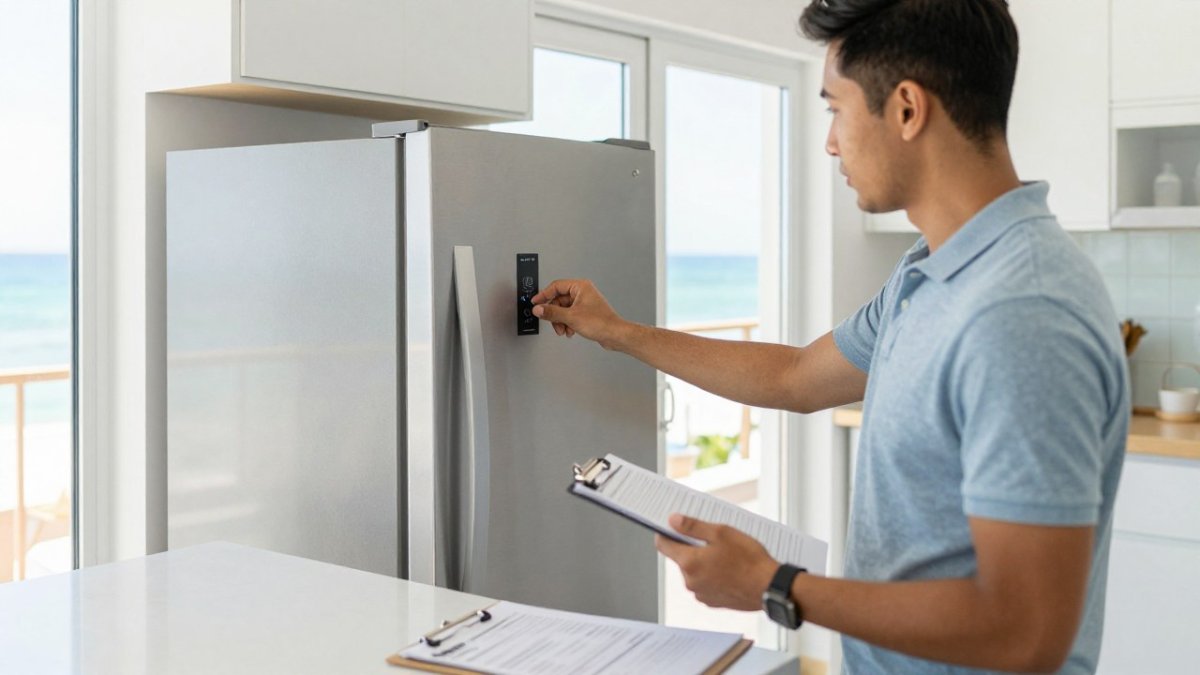
Pair replacements with your seasonal checks. Before each season, test every appliance, clean filters and coils, and confirm the water heater is working.
Plan for the green season, which runs roughly from May to November in Costa Rica. Read the green season guide for pricing, maintenance and booking patterns. Rain increases humidity, which puts extra strain on air conditioning, dehumidifiers and ventilation.
If you prefer not to manage this yourself, Marquis Stays Property Management can help with property management. book a property review
Frequently Asked Questions
How often should appliances be replaced in a vacation rental?
Most vacation rental appliances wear out faster than in a home because they run more hours and see more guests. Refrigerators, dishwashers, washing machines and water heaters often need replacing within roughly 8 to 12 years, while ranges and ovens may last longer if they are cleaned and checked regularly. Track each unit's installation date and condition in your log, and plan replacements before a failure forces an emergency purchase during a booking window.
Should I repair or replace an appliance in a rental property?
A practical rule is to replace when a repair costs more than about half the price of a comparable new unit, when the appliance is near the end of its typical lifespan, or when it fails repeatedly. Repairs make sense for newer units with a single, inexpensive fault. Factor in downtime and guest impact, since a broken refrigerator or water heater can lead to cancelled stays and poor reviews, which often tips the decision toward replacement.
How do you budget for appliance replacement in a vacation rental?
Set aside a fixed monthly amount for each property based on the age and expected lifespan of its appliances, rather than waiting for failures. Divide the expected replacement cost of each major appliance by its remaining service life to estimate the monthly reserve. Pricing varies by model, delivery and installation, so confirm current figures in colones (CRC) with local suppliers and keep the reserve in a separate capital expenditure account.
What should a vacation rental appliance maintenance checklist include?
A useful checklist covers condition checks on each major appliance before every turnover, deeper inspections at fixed intervals, filter and seal cleaning, leak and unusual noise checks, and testing of ovens, ranges and water heaters. Record the date, technician and any parts replaced. The same log supports warranty claims and gives you the age and repair history you need when deciding whether to repair or replace.