Table of Contents
- Why Self-Managing a Costa Rican Vacation Home Is Harder Than It Looks
- Pitfall 1: Underestimating Guest Communication and Booking Management
- Pitfall 2: Failing to Screen Guests and Protect Your Property
- Pitfall 3: Neglecting Tropical Maintenance and Humidity Control
- Pitfall 4: Operating Without Local Permits, Taxes, and Compliance
- Pitfall 5: Managing Remote Operations Without Local Support
- When to Stop Self-Managing and Hire a Property Manager
- Conclusion: The Real Cost of Self-Management
- Frequently Asked Questions
Last Updated: October 14, 2026
Why Self-Managing a Costa Rican Vacation Home Is Harder Than It Looks
Self-managing a Costa Rican vacation home sounds straightforward: you own the property, handle bookings, coordinate cleaners. But the reality of self-managing Costa Rican vacation homes is far more complex than most remote owners anticipate.
The challenge isn't just distance. It's the intersection of guest expectations, tropical climate demands, local regulations, and operational logistics that most guides gloss over.
The real cost isn't just your time. It's the revenue you leave on the table, the damage you miss, and the compliance risks you run without proper systems.
Pitfall 1: Underestimating Guest Communication and Booking Management
Guest communication is a multi-channel operation that starts before the booking and continues long after checkout.
Most remote owners think they can handle messages via email and Airbnb.
Managing this alone across time zones means missed inquiries, guests booking with competitors, and ignored confirmed guests, lower occupancy and poor reviews.
Here's what actually happens:
- A guest messages at 2 AM Costa Rica time asking about beach access
- You're asleep in Canada or Europe
- By morning, they've booked a different property
Many owners think they can check messages once a day, but delayed responses directly impact booking rates and guest satisfaction scores.
Pitfall 2: Failing to Screen Guests and Protect Your Property
Guest screening sounds simple: read reviews, check the profile, approve. But it requires judgment calls many remote owners aren't equipped to make.
A guest with no reviews might be legitimate, or have a damage history on another platform.
Without proper screening systems, you're taking unnecessary risks with your six-figure investment. Here's what you're missing:
- Identity verification: Is the person who booked actually the person checking in?
- Damage history: Has this guest damaged properties before (on other platforms)?
- Red flags: Are they asking for unusual terms, requesting cash payments, or avoiding your rental agreement?
As a remote owner, you won't discover these problems for days. By then the damage is done, recovery is expensive, and insurance claims require documentation you may not have.
Pitfall 3: Neglecting Tropical Maintenance and Humidity Control
The Costa Rican climate is beautiful but relentless on rental properties. Humidity, salt air, heavy rainfall, and heat damage properties faster than owners expect: mold grows, wood rots, paint peels, AC units fail, plumbing corrodes.
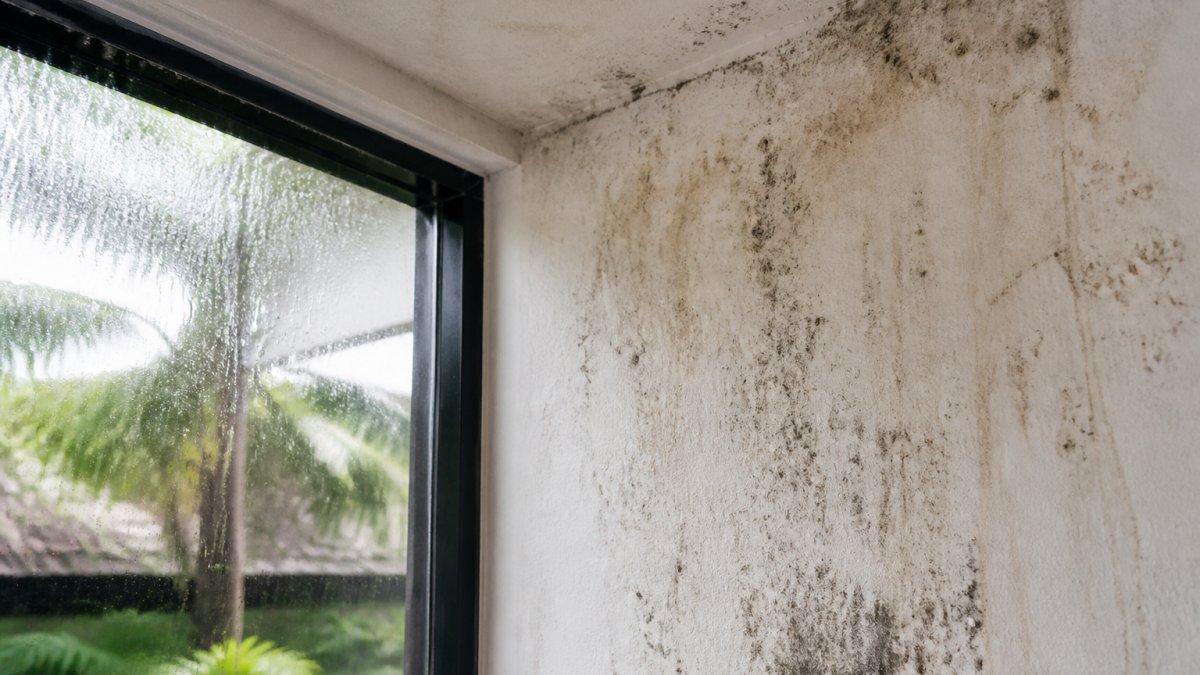
What most self-managing owners miss is that tropical maintenance is not a task list, it's a calendar. Costa Rica's dry season (roughly December-April) and green season (roughly May-November) demand different work.
Here is a practical seasonal maintenance calendar that remote owners can hand to a local caretaker or property manager:
Dry season (December-April): storm and sun damage window
- Inspect the roof, gutters, and flashing before the rains return; UV and wind take a toll in the dry months.
- Service the AC units now, filters, coils, drain lines, because they will run hardest in the humid months ahead.
- Check caulking and seals around windows, doors, and bathroom fixtures; dry-season shrinkage opens gaps that let water in later.
Green season (May-November): moisture and storm management
- Run a moisture check every 2-4 weeks in closed-up rooms; look for musty smells, condensation on glass, and dark spots on grout, baseboards, and behind furniture.
- Keep AC on a low, consistent setting or run a dehumidifier between guests, turning systems off entirely is what lets mold take hold.
- Clear drains, gutters, and exterior channels before and during heavy rain periods.
Year-round, every turnover
- Photograph the property before and after each stay so you can spot new moisture damage, stains, or pest activity.
- Confirm the cleaner has actually aired and dried the unit, not just wiped surfaces.
- Log every maintenance issue in one place so patterns (a recurring leak, a failing AC) are visible instead of treated as one-off repairs.
As a remote owner, you won't see these problems developing. By the time you hear about them, repairs are expensive and guests may leave poor reviews about mold, humidity, or broken amenities. Tropical property care requires local knowledge and consistent attention, the only way to get that from a distance is to put the calendar in someone's hands and verify it with photos and logs.
Pitfall 4: Operating Without Local Permits, Taxes, and Compliance
Costa Rica has short-term rental regulations that vary by municipality: some areas require permits, restrict rental duration, require tax registration, or limit the number of properties you can operate.
Many remote owners operate in a gray zone, assuming that if Airbnb accepts their listing they're legal. That assumption is dangerous.
Operating without this knowledge puts your investment at risk, a single inspection or complaint can trigger fines, back taxes, and legal complications.
Pitfall 5: Managing Remote Operations Without Local Support
You live in another country; your property is in Costa Rica. When something goes wrong, you can't drive over and fix it.
Here is what a real remote-management failure looks like in practice:
- A plumbing line fails at 3 PM Costa Rica time. You are asleep or at work in another time zone.
- You cannot reach your usual contact. You don't have a backup.
- Guests are without water for hours. They message the platform, not you.
Most self-managing owners handle this alone, texting a friend or hiring on a recommendation. That works until it doesn't, and when it fails, it fails expensively.
What a real local support system looks like
A workable remote setup has four parts, and self-managing owners usually have none of them:
- A primary local contact and a named backup. Not "a guy who can help." A specific person, with a specific phone number, who has agreed in advance to be called for property emergencies, plus a second person if the first is unavailable.
- A vendor bench, not a vendor. At minimum: a plumber, an electrician, an AC/HVAC technician, a handyman, a locksmith, a pest-control provider, and a cleaning crew. Know their response times and rates before you need them. If you are coastal, add someone who can handle storm and salt-air damage.
- A written authorization and spending protocol. Decide in advance what your local contact can approve without asking you (for example, emergency repairs up to a set limit) and what requires your sign-off. This is what prevents a 3 AM crisis from becoming a 3 AM negotiation.
- A documentation loop. Every repair gets a photo, a receipt, and a one-line note in a shared log. This is what makes insurance claims, tax deductions, and future budgeting possible.
Emergency response by category
Different emergencies need different plans. A single "call the manager" instruction is not enough:
- Power outage: Know whether it is a grid outage or a property issue, and have a plan for guests (flashlights, backup power for the fridge, communication).
- Water outage or leak: Know how to shut off the main water supply and who can get there fastest. Water damage compounds by the hour.
- Plumbing failure: Have a plumber on the bench who will answer after hours, and a policy for relocating guests if the property is unusable.
The cost and time math most owners never do
Self-management is often framed as "saving the management fee," which hides the real cost. A transparent comparison:
- Owner labor: Guest messaging, booking coordination, cleaner scheduling, vendor chasing, review responses, and admin. Most remote owners underestimate this by a wide margin because it is spread across evenings and weekends.
- Platform fees: Booking platforms take a commission on each reservation, whether you self-manage or not.
- Cleaning and turnover: Per-stay cost, plus laundry, supplies, and the occasional deep clean.
- Maintenance and repairs: Higher in a tropical climate, and higher still when you are reacting instead of preventing.
The honest question isn't "can I avoid the management fee?" but "what is my time worth, and what is the cost of mistakes made without local systems?" For most remote owners of high-end coastal homes, the second number is larger.
Effective remote vacation rental management is not about being reachable. It is about having a system that works when you are not. Without reliable local support, you are dependent on whoever you can reach, and that is not a management strategy.
When to Stop Self-Managing and Hire a Property Manager
Self-management makes sense if you have time, local knowledge, and the ability to respond quickly, but most remote owners lack at least one.
You should consider hiring a property manager if:
- You're managing the property from another country
- You can't respond to guest inquiries within a few hours
- You lack relationships with local contractors
- You're unfamiliar with local regulations
A professional property manager handles all five pitfalls: guest communication across time zones, guest screening and house rules, preventive maintenance, regulatory compliance, and local support networks.
The cost of professional management is an investment in your property's protection and revenue potential.
Conclusion: The Real Cost of Self-Management
Self-managing a Costa Rican vacation home is possible, but far more demanding than most owners anticipate.
The hidden costs are real: lost revenue from slow response times, damage from inadequate guest screening, expensive repairs from deferred maintenance, legal risk from compliance gaps, and constant stress from remote operations without local support.
If you own a luxury vacation home in Potrero, Tamarindo, La Fortuna, or Guanacaste and you're tired of managing it remotely, Marquis Stays Property Management handles everything.
Frequently Asked Questions
Can you really manage a Costa Rican vacation home remotely without being there?
Yes, but only with the right systems and local support in place. Remote vacation rental management requires reliable guest communication channels, a trusted local team for emergencies and maintenance, and clear house rules documented upfront. Many remote owners fail because they try to handle everything alone across time zones. You need either a detailed self-management workflow with vetted local contacts, or a professional property manager who handles check-ins, inspections, and vendor coordination. Without this infrastructure, you'll spend hours on calls and emails, and still miss critical issues like water leaks or guest disputes.
What maintenance issues should you plan for in a Costa Rican vacation home?
Tropical climate creates specific challenges: humidity-driven mold and mildew, saltwater corrosion on coastal properties, wood rot, plumbing issues from mineral-heavy water, air conditioning failures, and roof leaks during rainy season. Vacation rental maintenance in Costa Rica also includes regular pool maintenance, pest control, and appliance breakdowns from power fluctuations. Most self-managing owners underestimate the frequency of these repairs. Plan for regular maintenance and schedule frequent inspections. Without proactive care, a single mold infestation or AC failure can cost thousands and destroy your occupancy rate.
Is self-managing a vacation rental cheaper than hiring a property manager?
Not when you factor in your time, mistakes, and lost revenue. Self-management saves management fees, but costs you in hidden ways: guest communication across time zones, emergency vendor calls at 2 AM, missed bookings from poor listing optimization, cleaning and turnover coordination, and damage claims you could have prevented. When you calculate your hourly time cost, emergency expenses, and lost revenue, hiring a property manager often increases net profit, especially for remote owners.
What are the biggest mistakes self-managing owners make in Costa Rica?
The top five: (1) Poor guest screening, leading to property damage and theft; (2) Ignoring humidity and tropical maintenance, resulting in mold and costly repairs; (3) Inconsistent pricing and low visibility on booking platforms; (4) Operating without proper permits or tax registration, creating legal liability; (5) Trying to manage everything remotely without local vendor relationships or emergency protocols. Remote owners especially struggle because they can't respond quickly to guest issues or maintenance emergencies. One unresolved problem, a guest complaint, a broken AC, a mold discovery, can tank your reviews and occupancy for months.