Last Updated: November 20, 2026
Quick Summary
The best way to support local artisans in Costa Rica is to buy directly from makers at artisan markets, cooperatives, and small workshops. Ask where each piece was made and how the price supports the maker, so more of your money reaches the community.
- Direct sales can mean fairer pay for the maker
- Ask who made the item, where, and how long it took
- Artisan markets, cooperatives, and workshops are the best places to buy
- Look for signatures or maker marks as a sign of authenticity
- Ask permission before taking photos of makers or their stalls
Table of Contents
- Why Buying Directly from Local Artisans Matters
- Where to Buy Souvenirs in Costa Rica Made by Local Makers
- Costa Rica Handmade Crafts You Should Know
- How to Tell Authentic Handmade Goods from Mass-Produced Souvenirs
- Bargaining and Buying Etiquette That Respects Makers
- How to Support Local Communities in Costa Rica Beyond Shopping
- Packing and Shipping Your Purchases Home
- Your Next Step: Choosing Which Artisans to Support on Your Trip
- Frequently Asked Questions
Why Buying Directly from Local Artisans Matters
Costa Rica's handmade crafts carry generations of skill, and every purchase made directly from a maker helps keep those traditions alive. Many vacation rental guests want to take home something real rather than a mass-produced keepsake. Buying directly from local artisans is one of the most practical ways to support local communities in Costa Rica.
Artisan crafts are handmade by local people, often using traditional techniques passed down through families. A handcrafted object is made by hand in small batches, usually from local materials such as clay, wood, or natural fibers. These goods are a direct expression of regional culture, which is why they hold value well beyond their price tag.
When a traveler buys from a maker instead of a large retailer, more of the money stays in the community. Middlemen take a smaller share, and artisans can set fair prices for their time.
- Direct sales can mean fairer pay for the maker
- Fewer middlemen means more of your money reaches the artisan
- Traditional skills stay in use when people can earn a living from them
Where to Buy Souvenirs in Costa Rica Made by Local Makers
Local makers sell their work in several places, and each option offers a different experience. Artisan markets, cooperatives, and small workshops are usually the best places to find authentic goods. Hotel gift shops and large souvenir chains often carry imported items, so ask where a product was made before you buy.
A small artisan market stall in Costa Rica is often the easiest place to meet a maker face to face. Vendors can usually tell you how a piece was made and what materials were used.
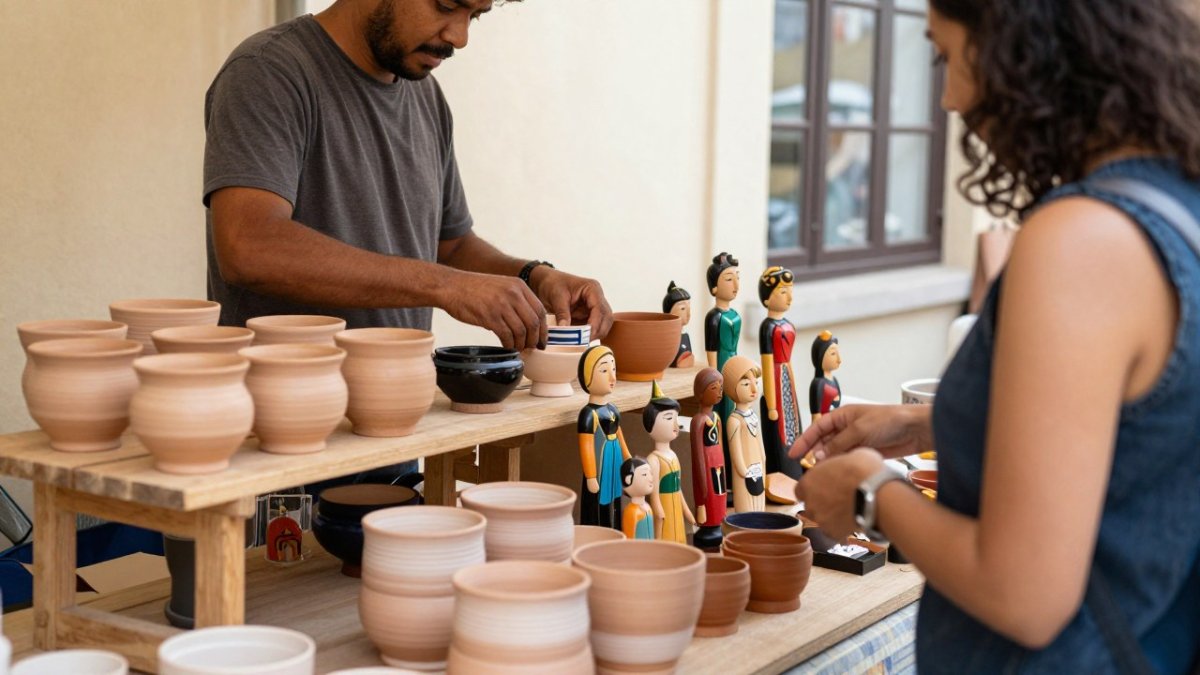
Cooperatives are another good choice. These groups pool the work of many makers and often set standards for quality and fair pricing. Ask staff which artisans are members and how the cooperative supports them. Buying through a cooperative can also be a simple way to make sure the money goes back to the people who made the goods.
- Artisan markets: meet makers and ask about their work
- Cooperatives: often list the makers they represent
- Workshops: see the craft being made and buy directly
Costa Rica Handmade Crafts You Should Know
Costa Rica has many handmade crafts, and many regions have their own specialties (Tourism Development - Instituto Costarricense de Turismo). Knowing a few of them helps you spot authentic pieces and understand what you are buying. Ceramics, painted wooden items, and woven or carved goods are among the most common crafts you will find.
Pottery and ceramics are especially popular. Makers shape clay by hand and often finish pieces with simple painted designs. Painted wooden items, including small carts and decorative boxes, are another favorite.
Carved masks are also widely sold. Buying a mask from the community or a trusted craft seller helps keep this tradition going.
- Pottery and ceramics
- Painted wooden items and traditional carts
- Carved masks, including Boruca masks
- Woven and natural-fiber goods
How to Tell Authentic Handmade Goods from Mass-Produced Souvenirs
Distinguishing locally made crafts from imported or mass-produced souvenirs takes more than a quick glance. The following concrete checks can help you buy with confidence and ensure your money reaches the maker.
Examine the materials and construction. Authentic handmade goods often use local materials such as clay from a specific region, wood native to the area, or natural fibers like cabuya or tule. Look for slight variations in shape, uneven brushwork, and natural imperfections that come from hand shaping.
Ask specific questions. A genuine maker will happily answer detailed questions about their work. Try these:
- "Where was this piece made?"
- "What materials did you use, and where did they come from?"
- "How long did it take you to make this?"
- "Did you make this yourself, or is it from a cooperative?"
- "Can you show me how the finishing is done?"
If the seller cannot answer basic questions or gives vague replies, the item may have been imported or made in a factory. A common pattern is for mass-produced souvenirs to be sold alongside handmade goods in the same market, so asking directly is key.
Look for maker marks and signatures. Many artisans sign or stamp their work, especially ceramics and wooden pieces. A signature, initials, or a small workshop label is a strong sign of authenticity. Ask whether the maker has a business card or contact information.
Watch out: Be cautious of labels that say "handmade" without any detail. A label alone is not proof; ask to see the workshop or the maker's name. Reputable sellers can usually explain their supply chain without hesitation.
Check for consistency across stalls. If you see the exact same item in multiple shops with identical paint and finish, it is likely mass-produced. Authentic crafts from a specific community often have subtle variations between pieces, even when made by the same artisan.
Understand fair compensation. A fair price reflects the hours of skilled work and the cost of materials. Ask the maker how long a piece took and whether the price includes a fair wage. While there is no fixed formula, a common pattern is that direct purchases from the maker or a cooperative return a larger share to the artisan than purchases from a large retailer.
- Check for local materials and hand-made irregularities
- Ask who made the item, where, and how long it took
- Look for signatures or maker marks
- Be cautious of identical pieces sold in many shops
- Ask how the price supports the maker
Bargaining and Buying Etiquette That Respects Makers
Bargaining is common in many markets, but it should be done with respect for the maker's time and skill. The following guidelines help you negotiate fairly and avoid common missteps.
Start by showing genuine interest. Before discussing price, ask about the technique, the story behind the piece, or the materials used. Many makers are happy to share their knowledge with visitors who show curiosity. This builds a better exchange than focusing only on price.
Ask permission before photographing. Photographing a maker's work or stall without asking can feel intrusive. A simple "May I take a photo?" in Spanish ("¿Puedo tomar una foto?") is usually appreciated. If the answer is no, respect it.
Negotiate reasonably. Bargaining is acceptable in many market settings, but avoid aggressive haggling over small handmade items. A reasonable approach is to ask a fair question about the price, for example, "Is there any flexibility on the price?", and accept a small discount if offered. Keep in mind that the price often reflects hours of skilled work. A price that feels low to you may still represent a fair income for the maker.
Watch out: Avoid making offers that are far below the asking price, especially for items that clearly took significant time to make. This can be perceived as disrespectful and may undermine the maker's livelihood.
Pay in cash when possible. Many small vendors have limited card options and may prefer cash. Carry small bills to make exact payments easier. If you pay by card, ask if there is a surcharge.
Respect the maker's boundaries. If a maker declines to negotiate, accept the price or walk away politely. Do not pressure or try to shame the seller into lowering the price.
Consider the impact of your purchase. Direct purchases from makers or cooperatives often return a larger share to the artisan than purchases from large retailers. When you pay a fair price, you are helping to keep traditional skills alive and supporting household incomes.
- Ask about the piece before negotiating the price
- Ask permission before taking photos
- Keep offers reasonable and respectful
- Carry cash for small purchases
- Accept a "no" gracefully
How to Support Local Communities in Costa Rica Beyond Shopping
Shopping is only one way to help. You can also support local communities by choosing locally owned accommodations, eating at family-run restaurants, and booking tours with local guides. These choices keep more income in the community after your visit ends.
Community-based tourism programs often connect visitors with artisans, farmers, and cooks. Taking part in a workshop, cooking class, or guided walk can give you a deeper understanding of local life. Many of these programs also share a portion of their revenue with the community.
Staying in a locally managed property is another option. Choosing a locally managed rental can help keep spending in the region. Ask any property manager how they work with local vendors and service providers.
- Stay in locally owned lodging when you can
- Eat at family-run restaurants
- Book tours and workshops with community-based operators
Packing and Shipping Your Purchases Home
Fragile pottery and ceramics need careful packing. Wrap each piece in clothing or bubble wrap and place it in the center of your suitcase, surrounded by soft items. Keep larger wooden pieces in a sturdy box if you plan to carry them home.
Shipping is often a better option for large or heavy purchases. Ask about insurance and tracking before you pay. Check your home country's import rules before you buy, since some natural materials may face restrictions.
Keep receipts and written details about each piece. A receipt that names the maker or workshop helps if you need to show customs officials what you bought.
- Wrap fragile items well and pack them in the center of your bag
- Ask makers about shipping options and costs
- Keep receipts and check import rules at home
Your Next Step: Choosing Which Artisans to Support on Your Trip
Choosing which artisans to support is a personal decision, and a little planning makes it easier. Pick two or three crafts that interest you most, then visit a market, cooperative, or workshop that carries them. Ask questions, buy directly when you can, and take time to learn the story behind each piece.
Marquis Stays Property Management manages luxury coastal homes in Costa Rica. Contact our team to learn more about our property management services.
Frequently Asked Questions
How can travelers support local artisans in Costa Rica?
Travelers can support local artisans by buying directly from makers at craft workshops, cooperatives and artisan markets rather than through resellers. Ask the maker about the materials, the technique and how long a piece takes to produce, which helps you confirm the item is handmade. Paying the price the maker asks, without aggressive haggling, ensures the income reaches the person who made the work. Telling friends and sharing where you bought the piece also helps build demand for local craft.
Where can you buy authentic handmade crafts in Costa Rica?
Authentic handmade crafts are often sold at artisan cooperatives, community craft workshops, regional markets and the studios of individual makers. Look for places where the artisan can explain the technique and the origin of the piece. Shops that display the maker's name, region or workshop are usually a better sign than shops selling large identical stock. Buying directly from the maker keeps more of the price with the person who created the work.
How can you tell whether a souvenir is locally made?
Check whether the item shows signs of handwork, such as slight variations in shape, uneven painting or natural irregularities in wood and clay. Identical pieces in large quantities usually indicate factory production. Ask the seller who made the item and where, and see whether they can describe the process. A maker who is happy to show you their workspace or explain the technique is a strong indicator of authenticity.
What should you ask before buying a handmade item?
Ask who made the piece, where it was made and what materials were used. Ask how long it took to produce and whether the maker sells directly or through a cooperative. These questions show respect for the craft and help you confirm the item is handmade. Keep your questions relaxed and genuine, since many artisans enjoy explaining their work to visitors who show real interest.